In compliance with a recent U.S. Treasury (OFAC) regulatory change, TOEFL and GRE testing within Iran has been paused effective immediately. Iranian nationals may continue to test outside Iran where testing is available. Affected test takers will be contacted directly regarding cancellations and next steps. [Find out more]
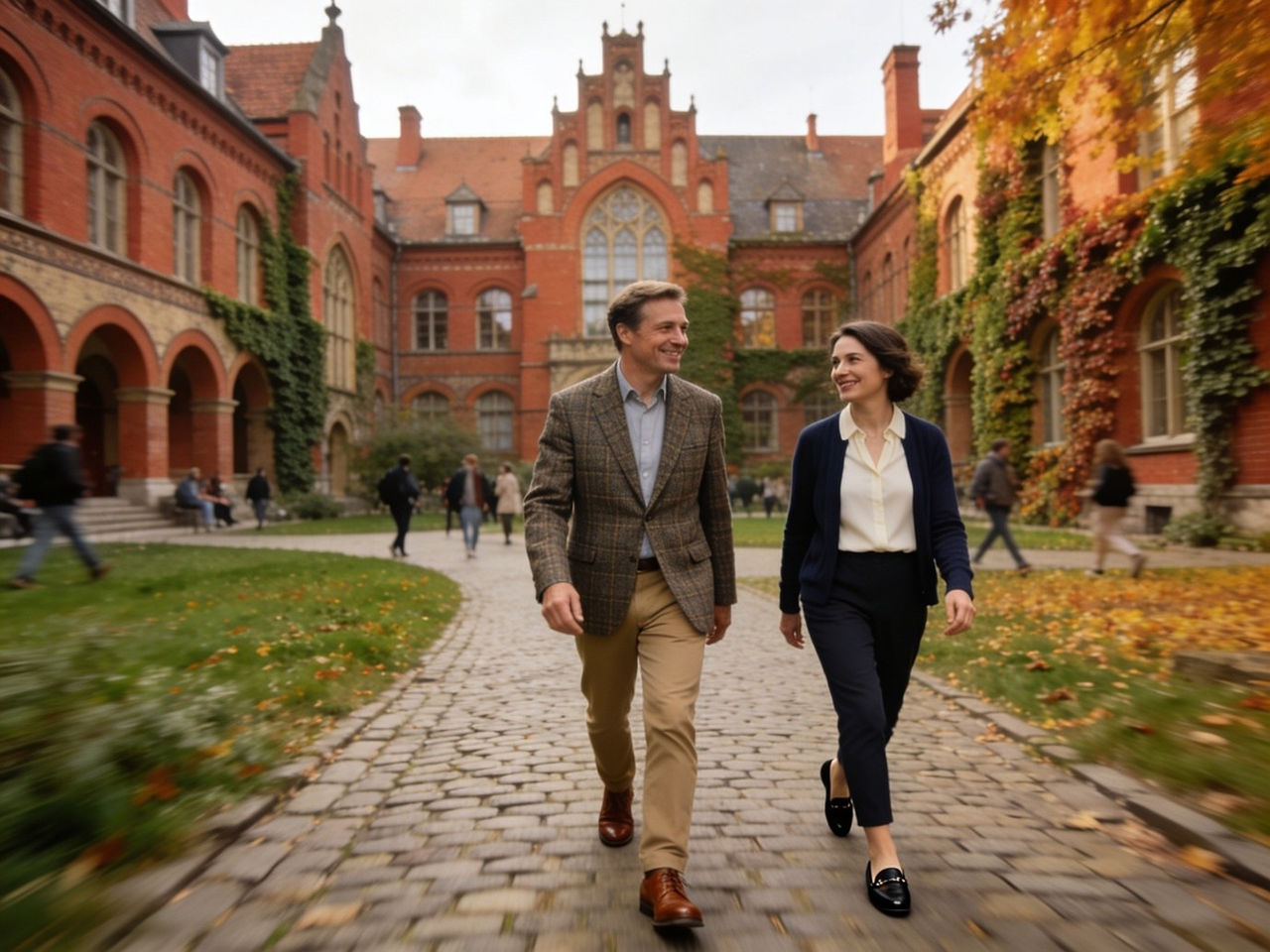
A decade ago, the study abroad map was fairly predictable: the U.S., the U.K., Canada, and Australia captured the imagination of most students. Countries like Germany were more of an afterthought. But today’s students aren’t tied to historic narratives and are increasingly favoring world-class cities like Munich and Berlin.
This shift has been driven a mix of smart policy choices by the German government, the sterling reputation of German universities, a rapid rise in English-taught programs, and a remarkable degree of affordability that more traditional destinations struggle to match.
In short: The wave of students opting for German universities isn’t a fad. It’s the product of savvy policy design and a willingness among international students, who have always had a pioneering spirit, to expand their view of the possible.
Today, roughly 420,000 international students are studying in German universities, up 33% – by a total of 100,000 students – since 2019. This number has grown at a steady rate each of the last six years, allowing students from overseas to integrate into Germany universities at a sustainable pace.
With a larger population than a country like the UK – about 84 million people compared to the UK’s 70 million – Germany also has the capacity to continue to expand its international student population, should it choose.
Why, exactly, has Germany gained so much momentum? Affordability, clear pathways to permanent residency, quality of life, and the broad availability of English-taught programs have all played a role.
1. Free Tuition vs. $50,000 Price Tags
Public universities in Germany remain tuition-free – with some modest fees each semester – for most EU and non-EU students in undergraduate and consecutive master’s programs.
This stands in stark contrast to other top destinations. In the UK, for example, annual tuition for international undergraduates averages £22,000–£38,000, while in the U.S. it often exceeds $50,000 per year.
For students from most parts of the world, not just so-called “emerging” markets, this difference is vast. And while many other countries praise the theoretical merits of education “access,” Germany is truly embracing the spirit of accessibility.
2. English-Friendly, STEM-Focused
Some students may be daunted by their lack of German proficiency, but strong English skills can serve as a ticket to success in Germany, which long ago recognized the value of English-taught programs.
Today, Germany offers 2,000+ fully English-taught programs, up 40% from just five years ago, according to the German Academic Exchange Service. German universities have also built a strong reputation in STEM fields, with many schools rising up key rankings for mechanical engineering, automotive design, and renewable energy research.
And it’s not hard to navigate cosmopolitan cities like Berlin, Munich, or Frankfurt with a little bit of English. Up to 80% of Germans under the age of 40 speak English at a conversational level or better. This percentage may be even higher in major cities.
3. Favorable Work Rights Policies During School
Germany’s work rights for international students strike a practical balance—generous enough to help cover living costs, while still being designed to ensure that students maintain a long-term focus on their academic work.
In Germany today, non-EU students can work up to 140 full days or 280 half-days per year, which translates to about 20 hours per week during study periods.
During semester breaks, students are free to work full time, whether that’s in a café, at a tech startup, or an internship tied to an academic program (note that those hours don’t even count against a student’s work limits).
It’s a practical system, allowing students to earn enough to pay rent without burning out before exams due to impractical work burdens.
4. Transition to Post-Study Work and Permanent Residency
After graduation, Germany also has migrant-friendly policies for graduates seeking to stay and work in the country. After obtaining a degree, international students can apply for an 18-month job-seeker permit to stay in Germany and search for work in any field, not just the one tied to the student’s major.
The visa is very flexible. Graduates can take side gigs or network at industry fairs as they seek full-time employment. Many graduates land roles directly in their field, often with large companies like Siemens or SAP, thanks to Germany’s chronic shortage of 300,000+ skilled workers in engineering and IT.
This isn’t just policy on paper—it’s a bridge to permanence. And once a graduate identifies the right job, they can transition to a work visa, then an EU Blue Card, and eventually permanent residency.
For students from countries India, Nigeria, or Brazil, Germany offers the rare promise of studying abroad without the looming uncertainty of visa lotteries or caps. Germany hands students the tools to turn a degree into a career, and a career into a life.
5. Quality of Life and Long-Term Payoffs
Living costs in major German cities like Berlin average roughly €1,500 per month, compared to £1,800 in London or $2,500 in Boston. Combined with subsidized healthcare and strong tenant protections, that affordability leads to less financial stress during school.
In addition, Germany’s labor market—projected to need over 400,000 skilled migrants annually by 2030—offers a wealth of future opportunity. For many, it’s the rare promise of education that leads directly into stable, well-paid employment.
In short, other countries may lead in historical prestige, but Germany now holds in advantage in practical appeal. In a world where students weigh every dollar and visa restriction, Germany has quietly mastered the new language of global education—it’s affordable, reliable, and ready for the future.
And if students are looking to study in Deutschland, they can punch their ticket with a strong TOEFL iBT score. More than 307 institutions (and counting!) in Germany accept TOEFL iBT results.


Copy URL to clipboard
Related

TOEFL Research
How TOEFL Measured the Validity of a Writing Task | Ching-Ni Hsieh
ETS’ Senior Measurement Scientist discusses her recent research into the “Write for an Academic Discussion” task, new to TOEFL iBT.
September 16, 2026
TOEFL Research
TOEFL iBT Behind the Scenes: Evaluating Students’ Writing Processes in Real Time
TOEFL researchers used eye tracking, keystroke logs, and stimulated recall to analyze test takers’ writing processes on the Write for an Academic Discussion task.
August 3, 2026

TOEFL Research
The Inside Scoop on TOEFL’s Latest Updates | Spiros Papageorgiou
ETS' Research Director discusses the design philosophy and supporting research behind the latest updates to TOEFL iBT.
June 10, 2026

TOEFL Research
Why Did TOEFL iBT Update its Score Scale?
An explanation of TOEFL iBT’s decision to update its score scale from 0 – 120 to 1 – 6.
June 8, 2026

TOEFL Research
Connecting TOEFL Speaking to Speaking at University
Learn how the TOEFL iBT® Speaking tasks, Listen & Repeat and Take an Interview, serve as strong indicators of how well students perform on actual academic speaking tasks.
May 10, 2026

TOEFL Research
Inside the TOEFL iBT Updates: Validity by Design
The TOEFL iBT team discusses the design principles underpinning the latest updates to the globally recognized English exam.
April 22, 2026

TOEFL Research
The “Forgotten” English Skill: A Deep Dive on Listening With Spiros Papageorgiou
Spiros Papageorgiou shares how TOEFL balances the need to create authentic Listening tasks while adhering to key measurement principles.
April 6, 2026

TOEFL Research
Building a Fair Measure of English Writing Skills: A Conversation With Larry Davis
Larry Davis offers insights into how TOEFL has refined its measurement of English writing skills.
March 29, 2026